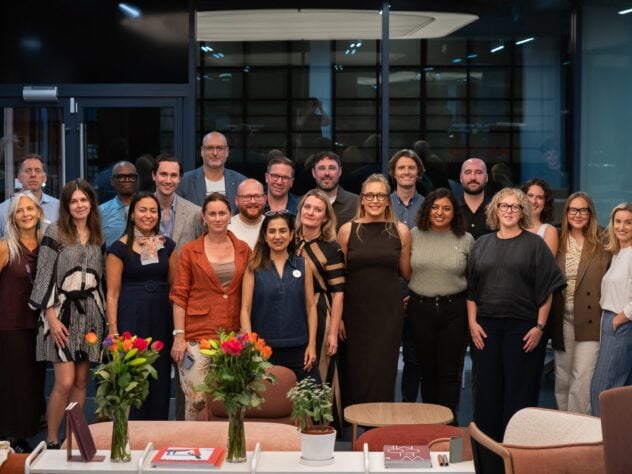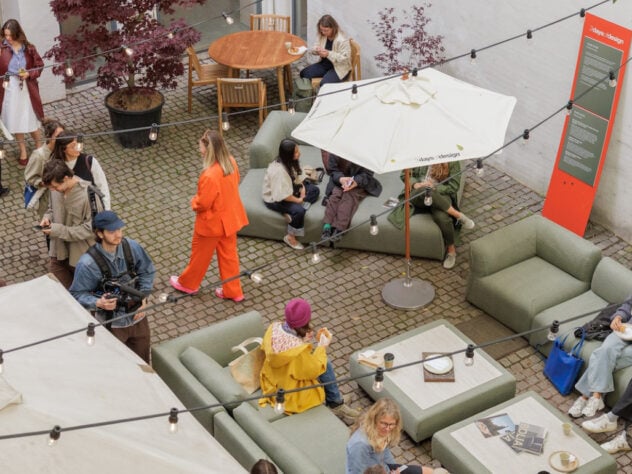

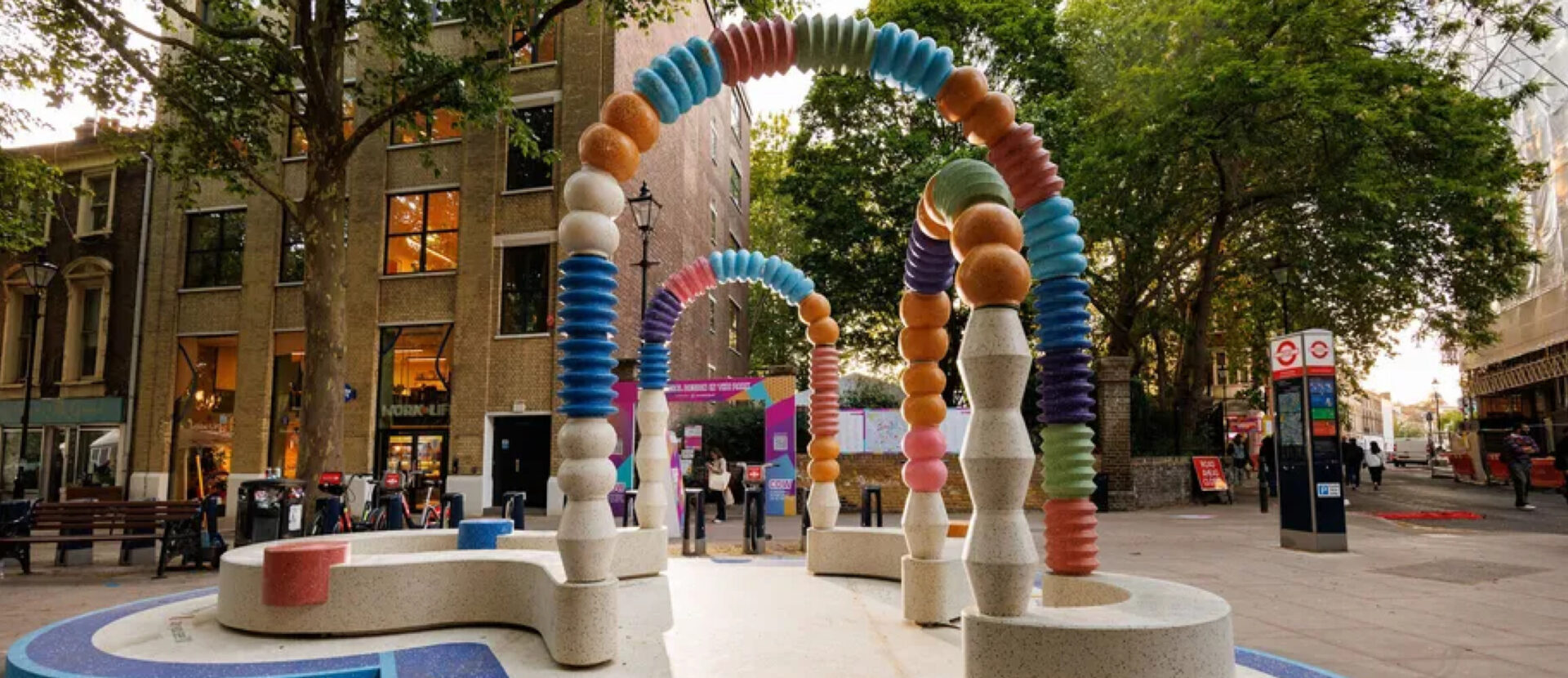
Clerkenwell Design Week returned for its 15th edition, bringing together three days of exhibitions, installations, talks and product launches from across the design industry.
The festival highlighted a clear shift towards more human-centred workplaces. Across furniture, materials and workplace strategy, conversations focused on adaptability, comfort, inclusivity and longevity, reflecting a growing emphasis on designing around the people using the space.
We’ve distilled the key themes that stood out and explored what they could mean for future workplace projects, furniture strategies and client conversations.
Designing for All, Not the Average
Neuroinclusive design was a recurring theme throughout the festival. A panel discussion hosted by Women in Office Design (WOD) at KI Europe, Designing for Neuroinclusion & Neuroaesthetics, challenged the idea of designing for an “average” user, instead advocating for environments that support a wider range of sensory, cognitive and behavioural needs.
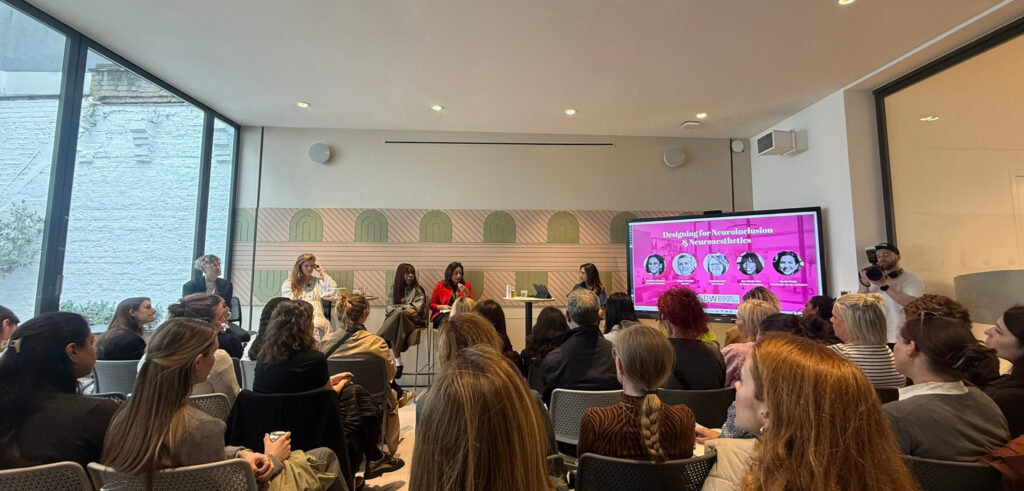
Rather than relying on a one-size-fits-all approach, workplaces should offer a variety of settings that allow people to work in ways that suit them best, whether that’s a quieter space for focused work, a collaborative setting, or the flexibility to move between the two. The discussion also reinforced that neuroinclusive design isn’t simply a wellbeing initiative; it’s increasingly being viewed as a business strategy.
“Designing for neuroinclusion means moving beyond compliance and thinking more carefully about how people experience a space,” said Katie Bowes, Head of Design for Axis at Work. “From sensory load, light sensitivity, colour accessibility, stimming comfort, restorative corners and moments of retreat, it’s about creating environments that give people greater agency over how they work.”
With 53% of Gen Z self-identifying as neurodivergent, according to Deloitte’s 2023 Gen Z and Millennial Survey, the need to accommodate a broader range of needs and preferences is becoming essential. As organisations recognise the link between workplace experience and performance, designing for variation is becoming a fundamental part of workplace design.
A Return to Nature-Inspired Design
Across textiles, finishes and materials, there was a noticeable return to nature-inspired design. Biomimicry — drawing influence from natural forms, systems and textures — appeared throughout multiple showrooms and collections.
Brands such as Kvadrat and Camira showcased textiles and finishes influenced by organic patterns, landscapes and natural movement, reinforcing a wider shift towards spaces that feel warmer, calmer and more tactile. Lighting brands, including Tom Raffield, placed an emphasis on natural materials and craftsmanship, creating pieces that felt as much about atmosphere and experience as they did function. Alongside their aesthetic appeal, the prominence of these materials also reflects a growing focus on material transparency, longevity and sustainable design principles.
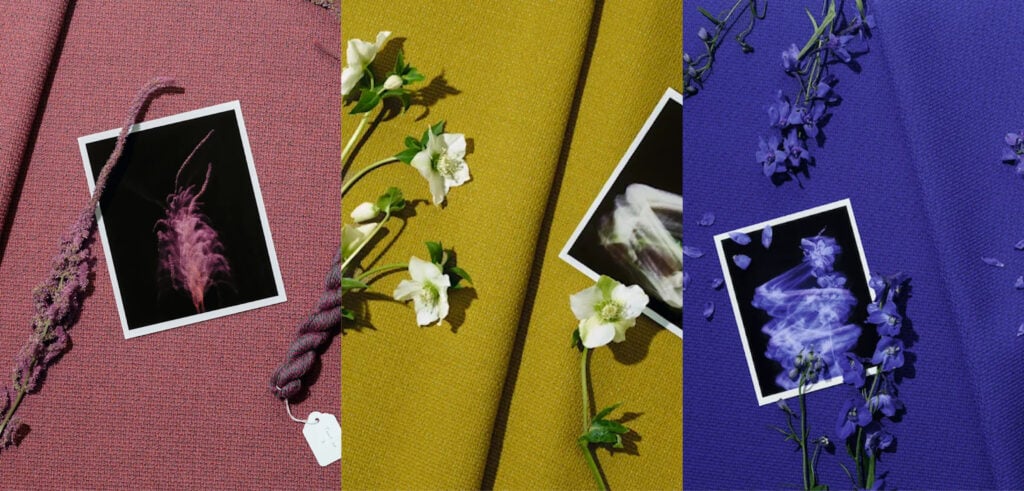
“In an increasingly AI-driven world, this reflects a growing desire for authentic connection – creating interiors that feel grounded, tactile and linked to the outside world”, noted James Martin, Senior Furniture Consultant. The prominence of these themes across multiple showrooms suggests that materiality, craftsmanship and sensory experience remain important considerations in workplace design.
The Next Chapter for Circular Design
Sustainability remained a prominent topic, but the conversation felt noticeably more practical than in previous years.
Rather than focusing on broad environmental commitments, discussions centred on how circularity can be delivered in practice — through refurbishment, remanufacture, product longevity and greater material transparency. A panel hosted by New Design Group explored some of the barriers still facing wider adoption, including inconsistent product data, cost uncertainty and limited infrastructure, while also highlighting a growing willingness across the industry to collaborate and share knowledge.
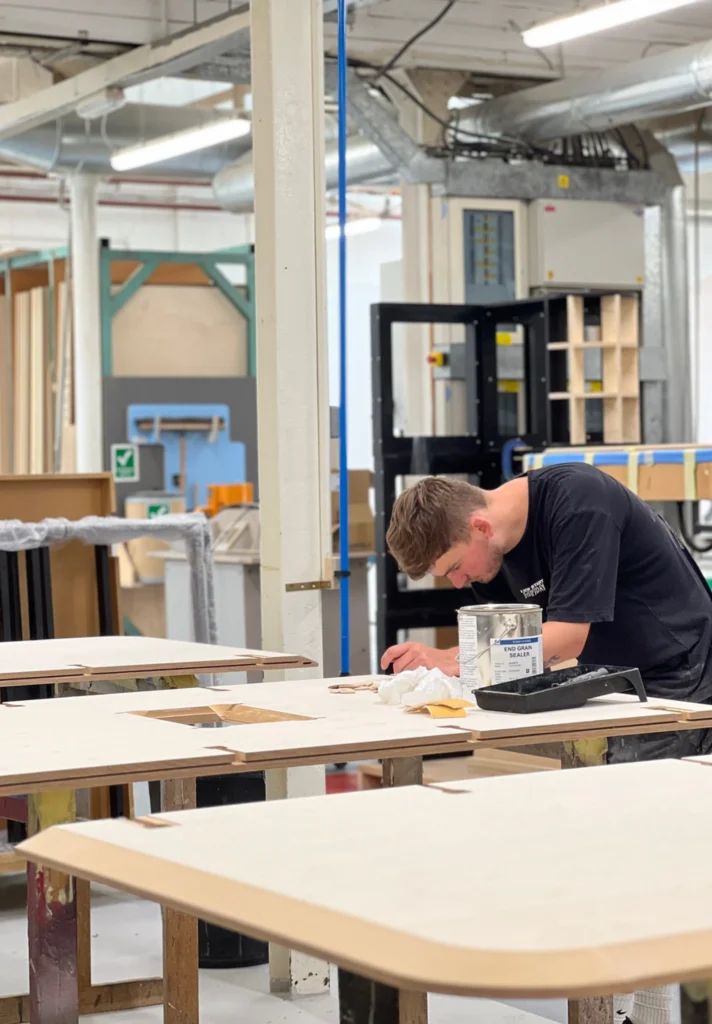
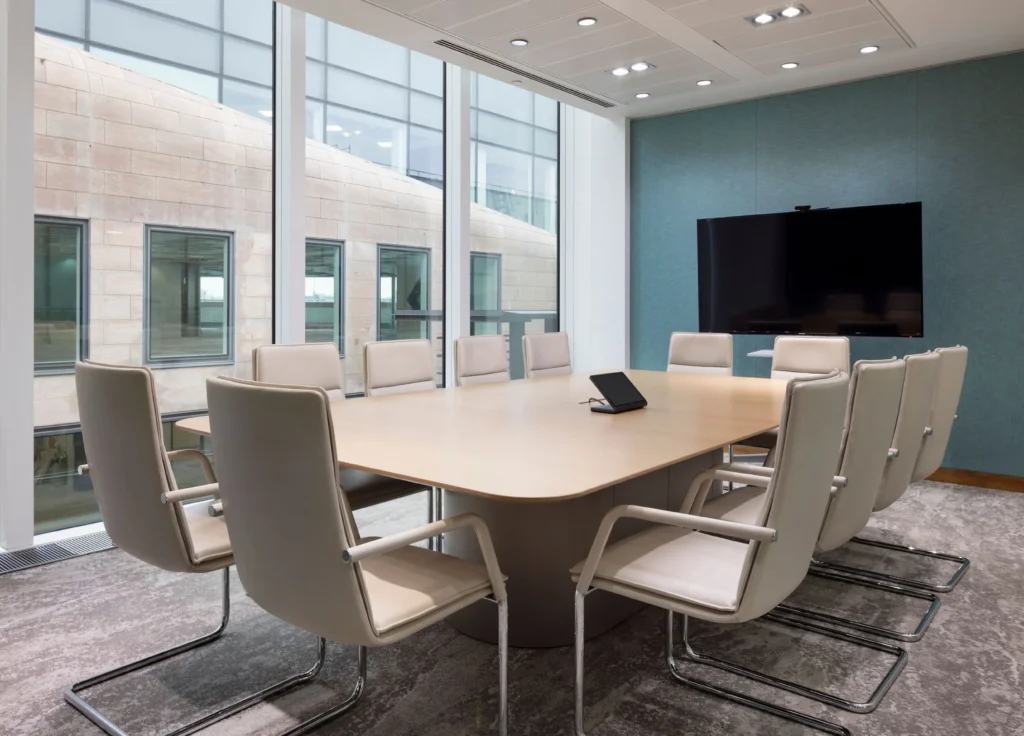
Pictured: a table remanufactured for reuse as part of a global law firm’s London office fit-out.
The overarching message was that circularity can no longer be treated as an end-of-project consideration. As clients place greater emphasis on lifecycle value and refurbishment potential, these conversations need to start much earlier in the design process.
Demand for Hospitality-Led Designs
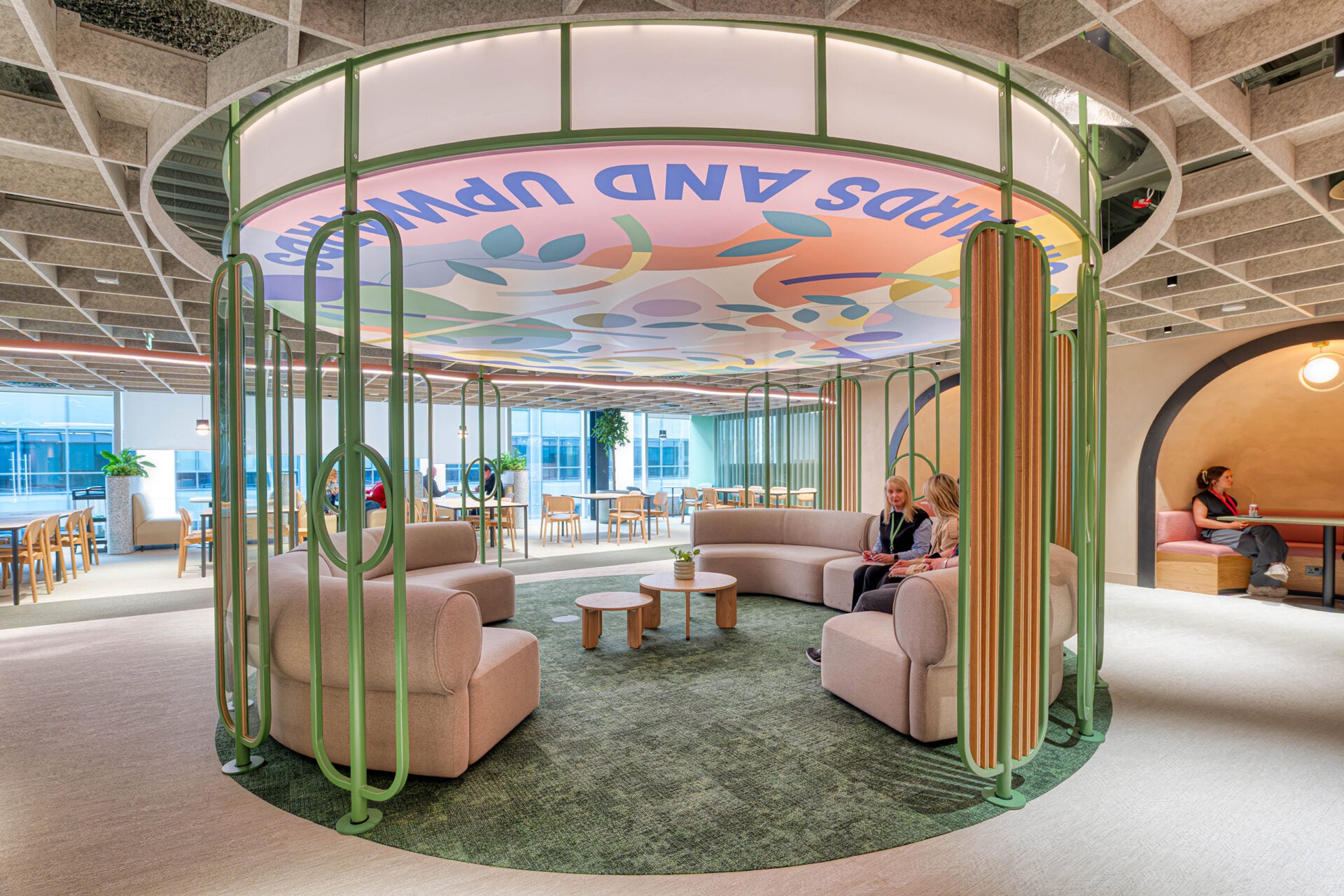
Softer forms, sculptural furniture and lounge-style settings featured heavily across showrooms, reflecting the continued shift toward hospitality-inspired workplace design.
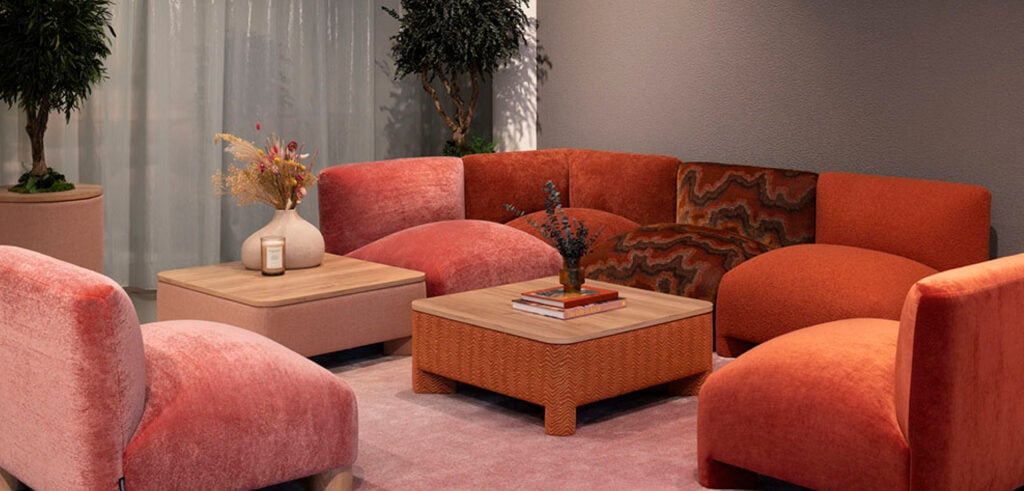
Davison Highley‘s Elmer sofa was one example. As Designer Imogen Bennett noted, “The sculptural form of the new sofa collection gives a softer, residential feel to commercial spaces.” The collection’s relaxed, modular design echoed a wider theme seen across the festival, with workplaces positioned less as formal places of work and more as destinations that can support a broader range of activities.
Alongside this came a greater emphasis on intuitive ergonomics. Wilkhahn‘s latest WiChair seating explored dynamic movement and self-adjusting support systems designed to encourage healthier posture without relying on users to manually adjust multiple controls. The approach reflects a wider move towards furniture that adapts to people, rather than expecting people to adapt to furniture.
Simplicity Is Back – but with Personality
Among many of this year’s launches, there was a noticeable move towards restraint. Rather than highly expressive statement pieces, brands focused on simple forms, thoughtful detailing and considered use of colour.
“Many brands struck a balance between simplicity, flexibility and personality,” said Kevin Craig, A&D Furniture Consultant. “Moventi’s Tor conference table stood out for its stripped back yet clever design, while Knoll’s Morrison Hannah Chair from the 1970’s brings character to workplace seating.”
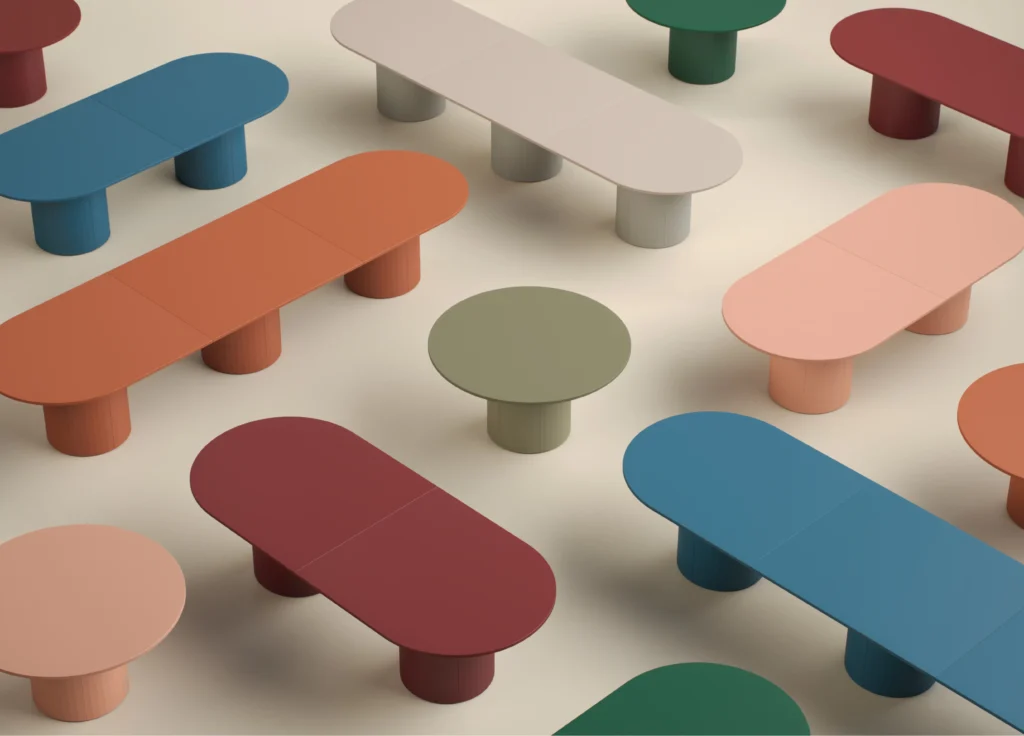
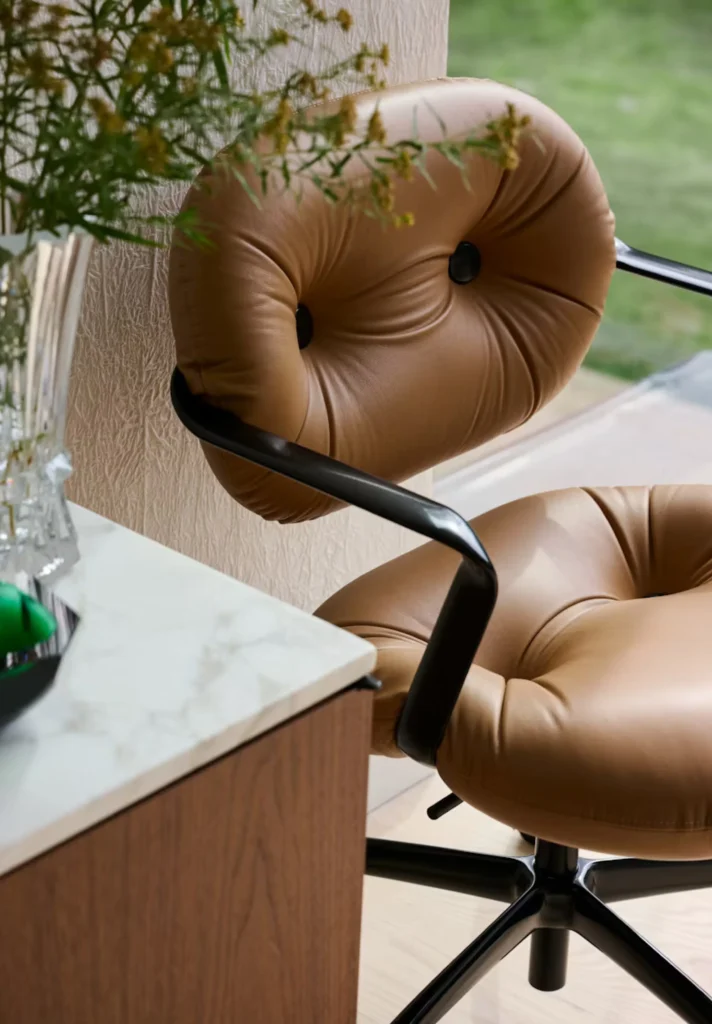
Left: Moventi‘s Tor conference table. Right: Knoll‘s Morrison Hannah chair.
The result was a collection of products that felt timeless rather than trend-led.
Final Thoughts
If there was one theme that connected many of this year’s conversations, it was a growing focus on the people using the space.
Whether through neuroinclusive design, circular thinking, hospitality-inspired settings or materiality, the discussion consistently returned to creating workplaces that are more adaptable, comfortable and responsive to those who use them.
If CDW 2026 demonstrated anything, it’s that workplace design is becoming less about the space itself and more about the people it serves.
If you’d like to explore any of the products, ideas or workplace themes featured in this article, please get in touch with our team.
For additional coverage from Clerkenwell Design Week 2026, follow Tsunami Axis on Instagram here.